
 EN
EN  KR
KR  ES
ES  AR
AR 

As semiconductor manufacturing continues to advance toward higher precision and greater automation, electrostatic discharge (ESD) control has become an important consideration in semiconductor equipment design, electronic component handling, and precision manufacturing processes. Material selection plays a significant role in meeting the mechanical, electrical, and static-control requirements of these applications.
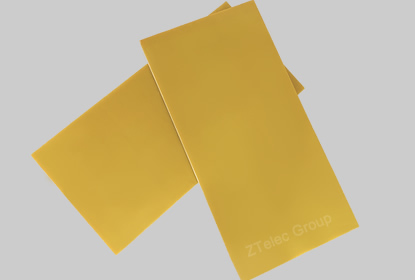
ESD FR4 Materials, an electrostatic-control epoxy glass-fiber laminate, can be used to manufacture various fixtures, insulating structural components, and precision-machined parts for semiconductor-related equipment. With its combination of mechanical strength, dimensional stability, and application-specific electrical properties, ESD FR4 offers a potential material solution for equipment manufacturers and precision machining companies.
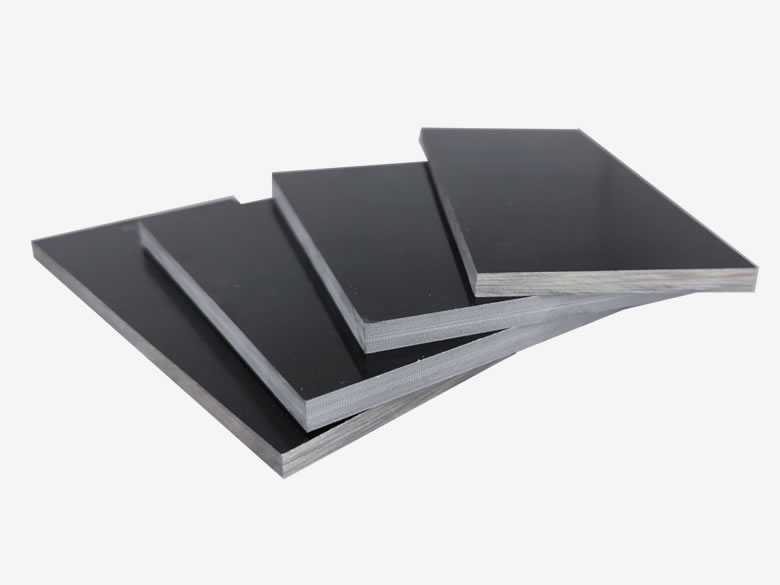
FR4 is a glass-fiber-reinforced epoxy laminate widely used in electrical insulation and industrial structural applications. ESD FR4 refers to specially formulated FR4-type materials designed to provide specified electrostatic-control properties.
Depending on the material formulation, ESD FR4 may offer static-dissipative or other electrostatic-control characteristics while retaining useful mechanical properties and machinability.
Compared with standard FR4, ESD FR4 is selected not only for its structural performance but also for its ability to meet defined electrical resistance requirements. However, its actual performance depends on the material grade, manufacturing process, and applicable test methods. Buyers should verify surface resistance, volume resistance, and other relevant specifications before selecting a material for a particular application.
Semiconductor manufacturing equipment contains various structural and electrical components that require reliable mechanical support and electrical isolation. Depending on the equipment design, ESD FR4 can be machined into support plates, insulating spacers, mounting plates, and other structural parts.
These components can help meet equipment-specific insulation and electrostatic-control requirements when the selected material grade is suitable for the intended operating conditions.
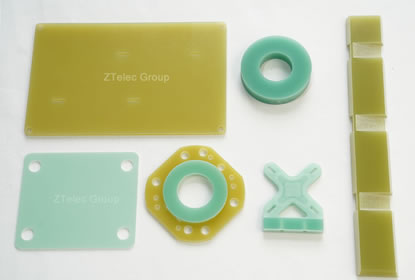
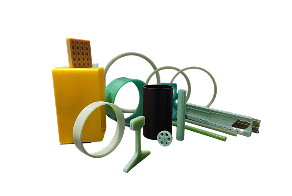
Precision fixtures are widely used in semiconductor equipment assembly, electronic component manufacturing, and automated production systems. ESD FR4 sheets can be CNC machined into custom fixtures, positioning plates, support blocks, mounting components, and insulating spacers.
For manufacturers requiring customized components, CNC machining allows parts to be produced according to engineering drawings, specified dimensions, hole positions, thickness tolerances, and other design requirements.
The availability of both ESD FR4 sheets and custom-machined parts can help buyers select the supply format that best matches their production processes.
Semiconductor packaging and testing equipment may require specialized fixtures, positioning components, and internal structural parts. ESD FR4 may be considered for selected non-contact structural or insulating components where its electrical and mechanical properties meet the equipment specifications.
For components used near sensitive electronic devices or in direct contact with semiconductor products, additional evaluation of dimensional accuracy, surface cleanliness, particle generation, thermal performance, and material compatibility may be necessary.
Automated handling systems are an essential part of modern semiconductor production. Depending on the design, ESD FR4 may be suitable for selected support structures, mounting parts, and static-control components used in equipment surrounding wafer-handling processes.
Applications involving direct wafer contact or strict cleanroom requirements require more comprehensive material qualification. Particle contamination, chemical compatibility, surface characteristics, and the specific electrostatic-control requirements should all be considered before use.
Beyond semiconductor fabrication equipment, ESD FR4 may also be used in selected fixtures and structural components for electronic assembly, inspection, and testing equipment.
By selecting a material with verified electrostatic properties and suitable mechanical strength, equipment manufacturers can develop components tailored to their production requirements.
Selecting an appropriate ESD FR4 grade requires more than confirming that the material is described as anti-static. Buyers should evaluate the following parameters:
ESD FR4 grades are not interchangeable. The appropriate grade should be selected according to the actual requirements of the equipment, rather than appearance or material name alone.
ESD FR4 materials can provide a useful combination of mechanical support, dimensional stability, machinability, and electrostatic-control properties for selected semiconductor equipment and precision manufacturing applications.
As semiconductor equipment becomes increasingly automated and application requirements become more specialized, choosing the appropriate material grade and machining solution is essential. By evaluating electrical performance, mechanical properties, cleanliness requirements, and dimensional tolerances together, manufacturers can make more informed material-selection decisions.
Looking for ESD FR4 sheets or custom CNC-machined ESD FR4 parts? Contact ZTelec Group with your drawings, dimensions, required electrical resistance range, and application details to discuss a suitable material solution.