 EN
EN  KR
KR  ES
ES  AR
AR 

ESD FR4 Epoxy Sheet is a composite material that combines electrostatic dissipative properties with high mechanical strength. Based on traditional FR4 epoxy fiberglass laminate, ESD FR4 is formulated with carbon black or antistatic polymer materials, giving it the ability to safely dissipate static electricity. It is widely used in electronic manufacturing applications where electrostatic sensitivity is a concern.
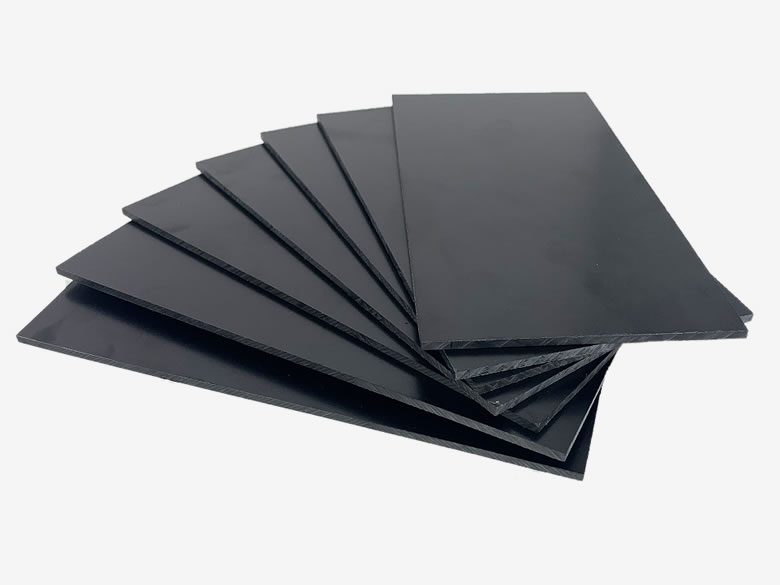
Through special material formulations and manufacturing processes, ESD FR4 provides a stable and controllable surface resistivity.
Compared with conventional FR4, ESD FR4 can effectively reduce the accumulation of electrostatic charges and help dissipate static electricity in a controlled manner.
ESD FR4 can be used not only as an insulating material but also as a structural support material in equipment.
ESD FR4 offers high dielectric strength, good insulation resistance, and stable dielectric properties.
Therefore, it is suitable for applications requiring the combination of:
Electrical Insulation + Mechanical Support + ESD Control
The manufacturing process of ESD FR4 is basically similar to that of conventional FR4, but the ESD material system, resin formulation, and resistivity control need to be specially designed.
The basic manufacturing process is:
Glass Fiber Fabric → Resin Formulation → Resin Impregnation → Drying → Prepreg → Cutting & Lay-up → Hot Pressing → Curing → Post-treatment → Inspection → Machining / Packaging
| Application Field | Typical Applications | Why Use ESD FR4 |
|---|---|---|
| Electronics Manufacturing | SMT production lines, PCB assembly tooling, fixtures, testing fixtures | Prevents electrostatic damage to sensitive electronic components |
| Semiconductor Industry | Wafer handling fixtures, chip testing trays, IC testing fixtures | Controls static electricity and protects chips and wafers |
| PCB Manufacturing | PCB drilling backup boards, testing fixtures, machining platforms | Combines rigidity, insulation, and ESD control |
| New Energy Vehicles | Battery production fixtures, motor controller assembly tooling | Prevents electrostatic effects on batteries and electronic control components |
| Precision Electronic Equipment | ESD workbenches, equipment partitions, support components | Reduces electrostatic charge accumulation |
| Automation Equipment | Robotic grippers, positioning plates, insulating support components | Provides good mechanical strength and ESD performance |
| Optoelectronics Industry | LED, display, and optical component manufacturing fixtures | Prevents electrostatic damage to sensitive components |
| Aerospace / Military Electronics | Electronic equipment assembly and testing tooling | Provides protection for ESD-sensitive components |
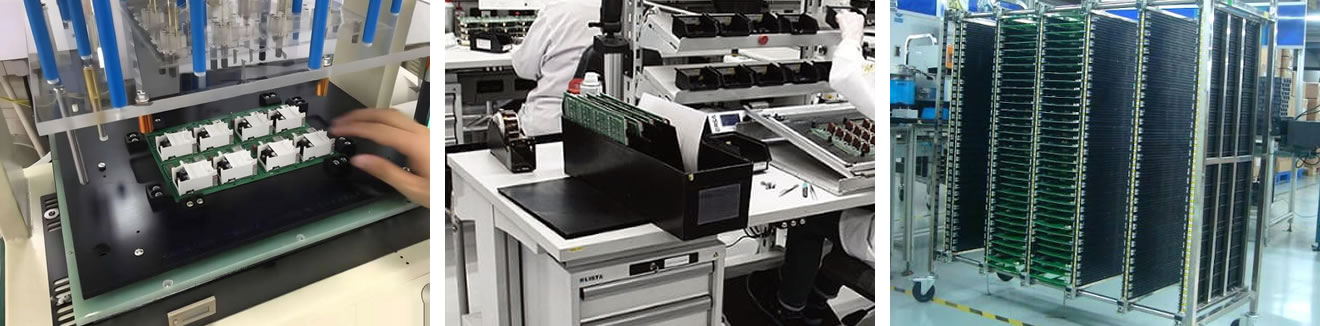
When selecting ESD FR4, in addition to conventional specifications such as thickness (commonly 3–40 mm, customizable) and sheet dimensions (commonly 1020 × 1220 mm), the following factors should be given particular attention.
It is important to confirm that the product is a bulk ESD / overall ESD type, and to check whether the surface resistivity meets the required range of 106–109 Ω.
Select the appropriate temperature grade according to the actual processing conditions, such as whether the material needs to withstand reflow soldering.
The standard temperature rating is generally around 130°C, while high-temperature grades can reach 155°C, 180°C or higher.
Water Absorption:
The lower the water absorption, the better. For example, <0.3% can help ensure dimensional and electrical stability in humid environments.
Mechanical Strength:
For fixtures that need to withstand certain mechanical stresses, attention should be paid to properties such as flexural strength and impact strength.
Color:
Commercially available ESD FR4 is mainly black. This is generally due to the addition of carbon black fillers, which also helps distinguish ESD FR4 from conventional yellow or natural/green FR4 sheets.
The selection process can be simply summarized as:
Application Environment → ESD Level → Thickness → Temperature → Flammability → Mechanical Properties → Dimensions → Machining Requirements
Recommended key considerations:
ESD Performance + Low Water Absorption + Dimensional Stability + CNC Machinability
Key considerations:
Dielectric Strength + Mechanical Strength + Temperature Rating + ESD Performance
Key considerations:
Mechanical Strength + Dimensional Stability + Surface Resistivity + Machinability