 EN
EN  KR
KR  ES
ES  AR
AR 

The core difference between DMD and NMN lies in their temperature resistance and cost. NMN is a higher-grade Class H (180°C) insulation material that delivers far superior tear resistance compared to Class B/F DMD, but it comes at a significantly higher price.
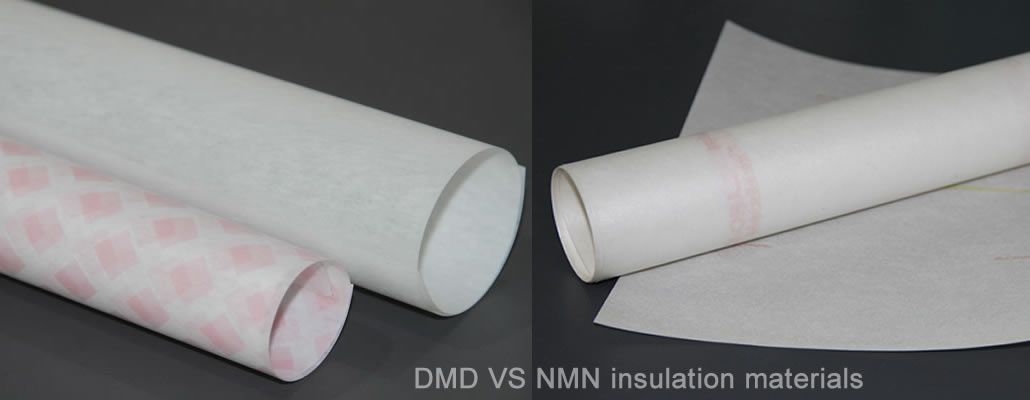
Here is a comprehensive, quantified comparison between the two materials:
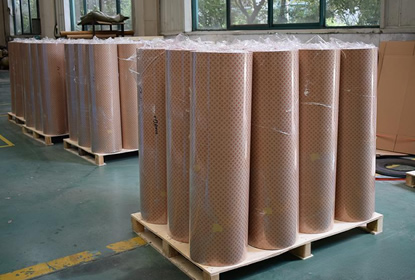
DMD insulation paper: Polyester Non-woven Fabric (D) + Polyester Film (M) + Polyester Non-woven Fabric (D).
NMN insulation paper: Nomex Aramid Paper (N) + Polyester Film (M) + Nomex Aramid Paper (N).
Key Difference: NMN uses Nomex aramid paper on its outer layers. Its temperature resistance and mechanical performance far exceed the standard polyester non-woven fabric used in DMD.
| Performance Indicator | DMD Insulation Material | NMN Insulation Material |
|---|---|---|
| Thermal Class | Class B (130°C) or Class F (155°C) | Class F (155°C) or Class H (180°C) |
| Tensile Strength | Machine Direction (MD) ≥ 110-150 N/10mm | Machine Direction (MD) ≥ 140-180 N/10mm |
| Breakdown Voltage | Typ. 7k-15kV (varies by thickness) | Typ.6-28KV(varies by thickness) |
| Tear Resistance | Easy to tear; unfit for high-stress stretch | Extremely tough; excellent mechanical stress tolerance |
| Varnish Absorption | Standard resin absorption capacity | Excellent absorption and bonding with varnish |
| Production Cost | Low price, high cost-efficiency | Higher price (due to expensive Nomex raw material) |
DMD is ideal for: Slot insulation, phase insulation, and inter-turn insulation in standard small-to-medium low-voltage motors, micro-motors, home appliance motors, and Y-series standard motors.
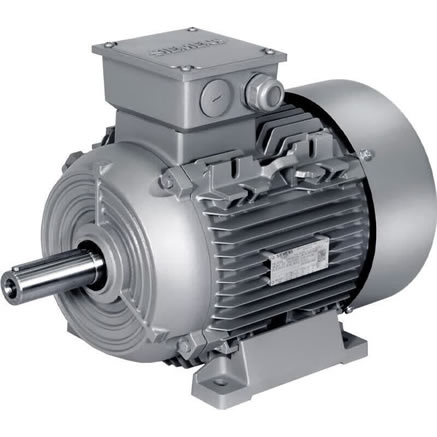
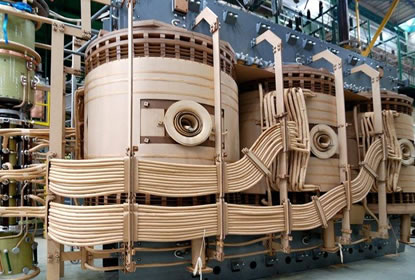
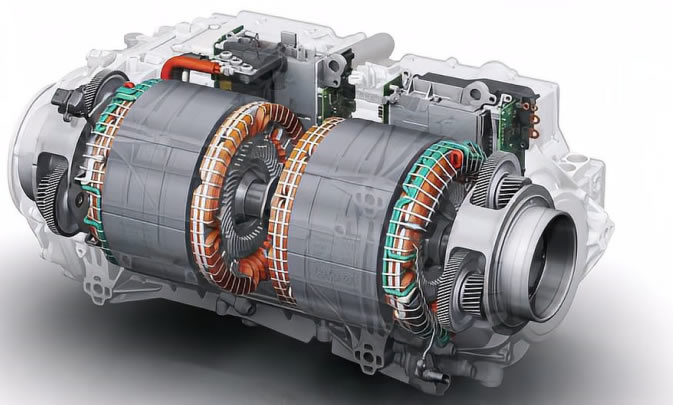
NMN is ideal for: Variable-frequency drive (VFD) motors, crane/metallurgical motors, traction motors, high-voltage transformers, and EV drive motors operating under high power density, heavy loads, and frequent overload conditions.
No, it cannot be blindly substituted.
Although some modified DMD materials can achieve a Class F (155°C) thermal rating, their maximum temperature-rise tolerance and mechanical tear strength still fall far short of NMN.
Consequences of substitution: DMD is highly prone to cracking during high-speed automated winding. Furthermore, under continuous motor overload or localized hotspots, DMD will age and embrittle prematurely, leading to winding breakdown and motor burnout.
Look and Feel:
DMD: The surface consists of polyester non-woven fabric, making it relatively soft with a noticeable fuzzy or fleecy texture. It comes in various colors, commonly white, white with green lines, or dyed shades (such as pink or blue).
NMN: The surface is made of DuPont Nomex aramid paper, which is stiffer, smoother, and has a distinct, tough paper-like texture. Its color is typically a natural milky white or pale yellowish-beige, and the central film interlayer is faintly visible.
Tear Test: Try tearing a corner by hand. DMD tears apart relatively easily, whereas NMN is extremely resilient and almost impossible to rip with bare hands.
Raw Material Monopoly: The Nomex aramid paper used on both sides of NMN relies on core technologies and production capacities long dominated by international giants like DuPont (USA), resulting in high raw material costs.
Strict Process and Adhesive Requirements: Laminating aramid paper with polyester film requires higher temperatures, greater pressure, and specialized composite adhesives to ensure the material does not delaminate or carbonize at 180°C.
Moisture Prevention: NMN is particularly susceptible because its aramid paper surface is naturally hygroscopic. Absorbing moisture will significantly degrade its electrical insulation performance.
Environmental Controls: Materials must be stored in a dry, cool, well-ventilated warehouse, completely shielded from direct sunlight. If the material is found to have absorbed moisture, a low-temperature pre-drying process is highly recommended before use.