
 EN
EN  KR
KR  ES
ES  AR
AR 

With the rapid development of renewable energy, power grid upgrades, and high-efficiency power distribution systems, oil-immersed transformers are facing increasingly stringent requirements for winding insulation structures in terms of mechanical strength, thermal performance, and long-term operational reliability. As an essential insulation material used in winding manufacturing, Diamond Dotted Paper (DDP) has been widely adopted in distribution transformers, power transformers, wind power transformers, and photovoltaic step-up transformers due to its excellent bonding and insulation properties.
Industry experts point out that the proper selection of DDP insulation paper in terms of thickness, resin coating weight, and thermal class plays a critical role in improving transformer short-circuit withstand capability, reducing operational noise, and extending service life.
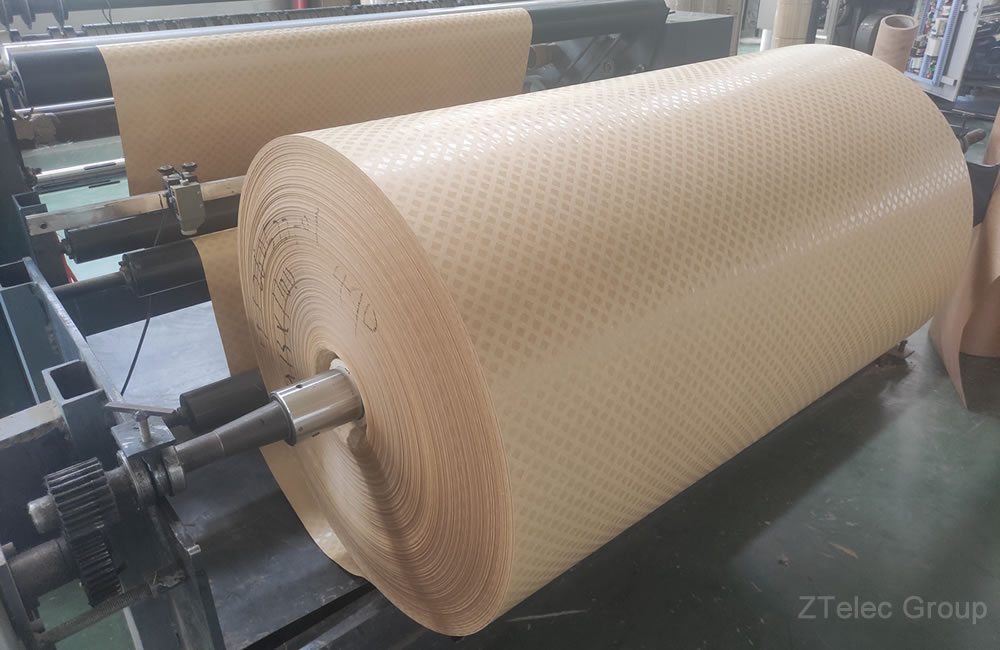
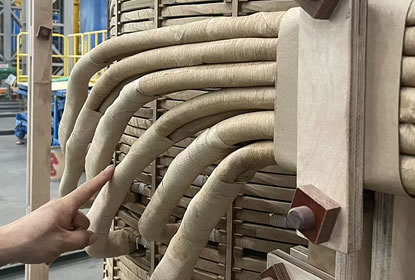
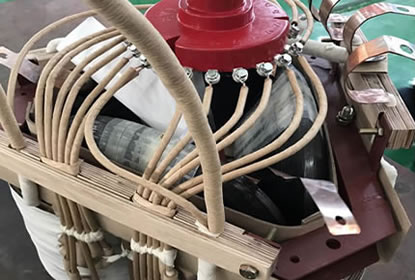
DDP insulation paper is manufactured by uniformly coating high-density electrical insulating paper with thermosetting epoxy resin dots. After the winding process is completed, the coils are heated and cured at temperatures ranging from 100°C to 130°C. During this process, the resin dots melt and cross-link, forming a stable integrated structure between conductors and insulation paper.
Inter-turn Insulation:Used between copper or aluminum conductors to prevent turn-to-turn short circuits, representing the most common application of DDP paper.
Inter-layer Insulation:Provides reliable electrical insulation between different layers of high-voltage windings while improving electric field distribution.
Overall Coil Bonding and Curing:After heat curing, DDP paper forms an integrated winding structure that effectively minimizes winding displacement during transportation and operation.
| Transformer Type | Inter-turn Insulation | Inter-layer Insulation |
|---|---|---|
| 10kV Distribution Transformer | 0.08–0.13 mm | 0.18–0.25 mm |
| 35kV Distribution Transformer | 0.13 mm | 0.25–0.38 mm |
| 110kV Power Transformer | 0.13–0.18 mm | 0.38–0.50 mm |
| Wind and PV Transformers | 0.13–0.18 mm | High Resin Content Reinforced Type |
1. Insulation Class
The paper thickness and insulation margin should be determined according to the system voltage level.
2. Conductor Type
Rectangular copper conductors and continuously transposed conductors (CTC) generally require higher mechanical strength.
3. Short-Circuit Withstand Requirements
Wind power, photovoltaic, and railway traction transformers are recommended to use high-resin-content DDP paper.
4. Insulating Oil Compatibility
High-quality DDP paper should be compatible with mineral oil, natural ester fluids, and synthetic ester insulating liquids.
| Performance Item | DDP Insulation Paper | Conventional Cable Paper |
|---|---|---|
| Electrical Insulation Performance | Excellent | Excellent |
| Bonding and Fixing Capability | Excellent | None |
| Short-Circuit Strength | High | Moderate |
| Winding Stability | High | Relatively Low |
| Operating Noise | Low | Relatively High |
The rapid growth of renewable energy integration, smart grid development, and energy-efficient transformers is accelerating the evolution of DDP insulation paper toward higher density, greater mechanical strength, improved thermal resistance, and environmentally friendly adhesive systems.
Particularly in wind power and photovoltaic step-up transformers, windings are exposed to more frequent thermal cycling and electromagnetic impacts, placing higher demands on the bonding strength and long-term aging resistance of DDP paper.
Industry specialists believe that future high-end oil-immersed transformers will increasingly adopt the combination of high mechanical strength DDP paper and optimized winding curing processes to further improve equipment reliability and operational stability.