
 EN
 KR
 ES
 AR


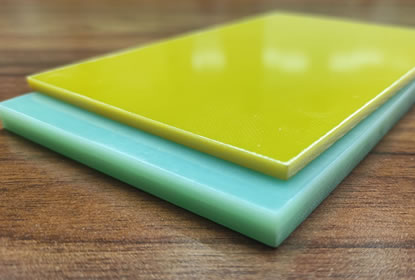
When evaluating and selecting FR4 epoxy board (or FR4 epoxy laminated sheet), the Glass Transition Temperature (Tg) and the IEC Standard Temperature (typically referring to the thermal rating temperature of the insulation system) are two core concepts that are often confused, but have completely different definitions and physical meanings.
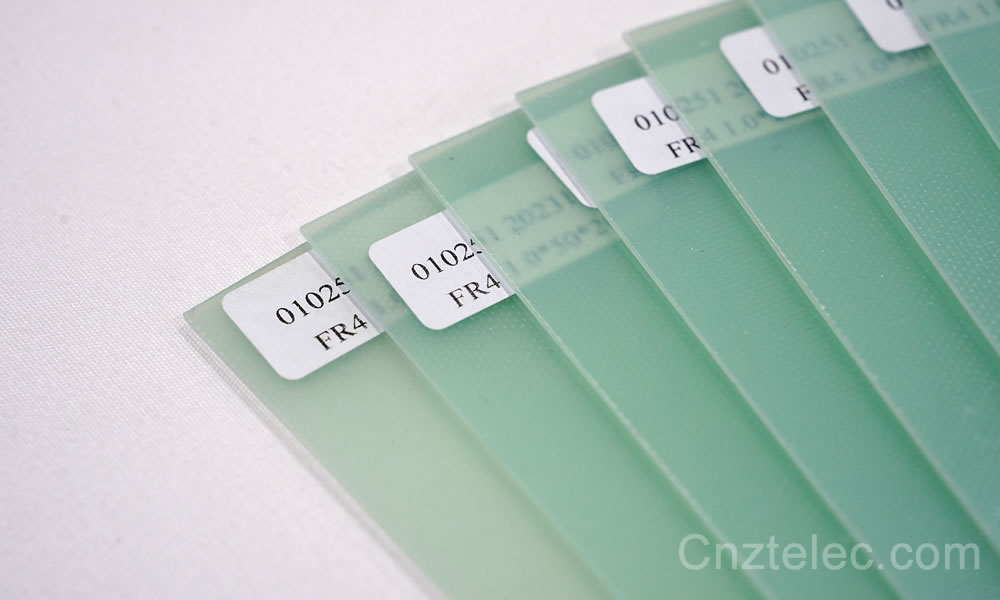
Their differences can be thoroughly analyzed from three dimensions: definition properties, physical significance, and engineering application relationships:
| Comparison Dimension | Glass Transition Temperature (Tg) | IEC Standard Temperature (Insulation Class Temperature) |
|---|---|---|
| Standard System | Material physical and chemical indicators (e.g., IPC-4101, ASTM, etc.) | Electrical insulation and safety standards (e.g., IEC 60085, IEC 60216, etc.) |
| Essence Definition | The critical temperature range at which the resin matrix transitions from a rigid state (glassy state) to a soft/high-elastic state (rubbery state). | The maximum allowable operating temperature at which an electrical equipment insulation system can ensure long-term safe operation and secure lifespan without thermal aging failure. |
| Physical Manifestation | Above this temperature, the material does not melt, but its mechanical strength and modulus drop sharply, and the coefficient of thermal expansion (CTE) increases significantly. | At this temperature under long-term continuous operation (usually designed for a 20,000-hour lifespan), the material will not lose its dielectric properties due to thermochemical degradation. |
In actual engineering, many engineers mistakenly believe: “As long as the equipment operates at 130°C, a board with Tg ≥ 130°C must be selected.” In fact, this is a misconception. The Tg of the material is much higher than its long-term allowable operating temperature:
IEC Insulation Class Breakdown (Common References):
Class B: Limit long-term operating temperature 130°C
Class F: Limit long-term operating temperature 155°C
Class H: Limit long-term operating temperature 180°C
Why must the operating temperature be lower than Tg?
If the epoxy board operates for a long time at or even above its Tg, the resin will remain in a high-elastic state for an extended period, causing a sharp drop in the board’s bending strength, shear strength, and dimensional stability. When subjected to transformer winding mechanical stresses or switchgear electrodynamic forces, it is extremely prone to creep, deformation, or even delamination.
Safety Margin Principle: To ensure mechanical and electrical lifespan, industry practice requires that the Tg of the board should typically be 20°C to 30°C higher than the actual maximum operating temperature (or IEC rated temperature) of the equipment.
| IEC Insulation Class / End Application Scenario | Corresponding IEC Long-term Operating Temperature | Required FR4 / Epoxy Board Tg Grade | Typical Technical Reason |
|---|---|---|---|
| Class B Electrical Equipment (e.g., ordinary dry-type transformer skeletons, low-voltage switchgear lining panels) | 130°C | Standard Tg Epoxy Board (Tg ≥ 130°C – 140°C) | The operating temperature is lower than Tg, the board remains completely rigid, meeting conventional mechanical and electrical loads. |
| Class F Electrical Equipment (e.g., high-power phase-shifting rectifier transformers, medium and high voltage insulation parts) | 155°C | Medium/High Tg Epoxy Board (Tg ≥ 150°C – 170°C) | If standard Tg boards are used, they will enter a high-elastic state at 155°C, leading to mechanical structure softening and failure. Tg must be upgraded. |
| Class H and Special High-Temperature Applications (e.g., heavy-duty rail transit transformers, aerospace and special motors) | 180°C and above | Ultra-high Tg Epoxy Board or Modified Substrate (Tg ≥ 180°C – 200°C+ or modified matrix) | Requires coping with severe thermal shocks and high lead-free soldering/hot pressing loads (e.g., 260°C instantaneous reflow shock). |
Tg is the material’s “physical temperament”: It tells you at what temperature the board will begin to soften.
The IEC standard temperature is the system’s “safety red line”: It tells you how long the electrical equipment can safely operate under standard specifications.
Connection: When designing high-reliability insulation structures, the IEC operating temperature is the upper-limit requirement, while Tg is the bottom-line indicator during material selection. Tg must leave sufficient temperature margins to completely avoid mechanical delamination and deformation failure caused by elevated temperatures.
Looking for Reliable FR4 Epoxy Board Solutions? As a specialized manufacturer under ZTelec Group, Xujue Electrical features advanced automated production workshops, delivering high-performance FR4 epoxy resin sheets and precision-machined parts tailored to your specific application scenarios. Whether you need custom raw materials or expert technical support for insulation design, feel free to contact us today.