
 EN
EN  KR
KR  ES
ES  AR
AR 

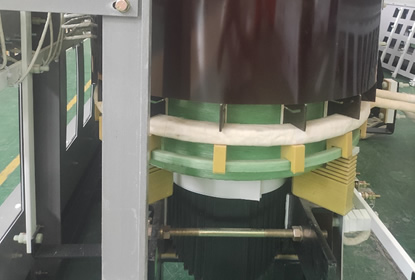
Epoxy spacers for transformers are primarily used for coil support, core clamping, and electrical insulation in dry-type and oil-immersed transformers. They effectively absorb mechanical vibration, prevent winding deformation, and provide high-voltage insulation up to dozens of kilovolts. Their core applications and technical requirements are as follows:
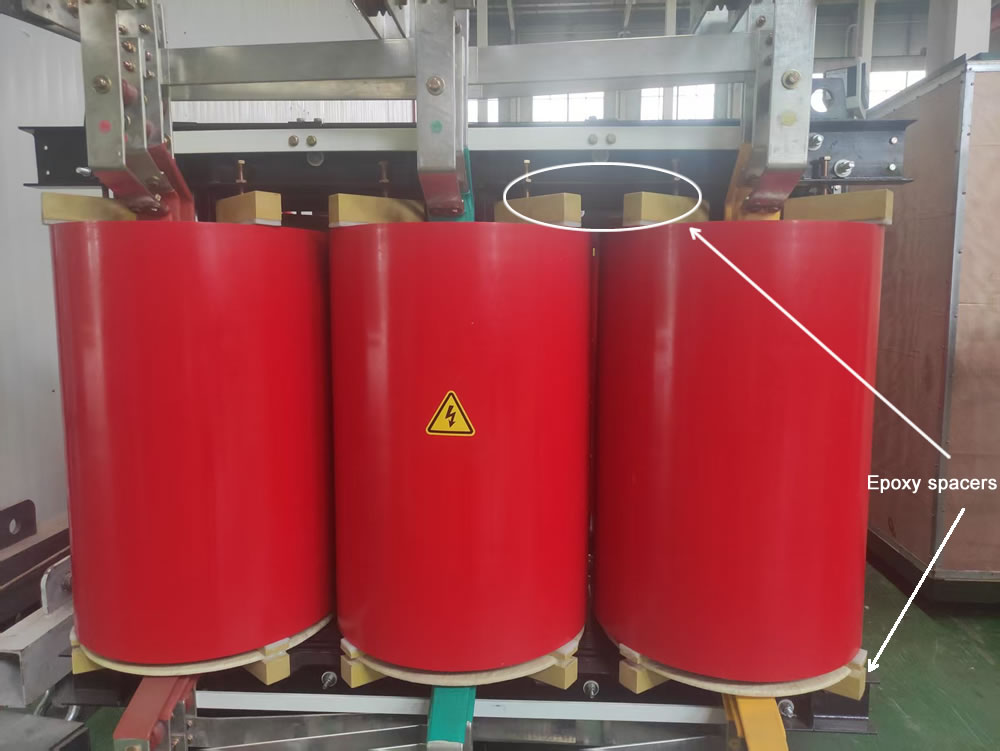
Winding Support and Positioning: They provide support between high-voltage and low-voltage coils, as well as between coils and the core, ensuring proper insulation clearance.
Short-Circuit Force Resistance: They withstand the massive axial and radial electromagnetic forces generated during accidental short circuits, preventing coil displacement or deformation.
Vibration and Noise Reduction: They absorb electromagnetic vibrations from the core and coils during operation, minimizing overall transformer noise and avoiding mechanical loosening.
Insulation Isolation: Combined with insulation cylinders or air ducts, they fulfill the creepage distance and electrical clearance requirements for various voltage levels.
High Mechanical Strength: Exceptional compressive, flexural, and shear strengths are required to prevent cracking or deformation under long-term heavy loads and short-circuit impacts.
Excellent Electrical Insulation: High dielectric strength and low dielectric loss tangent (\(\tan \delta\)) are essential to endure long-term working voltage and lightning impulse voltage.
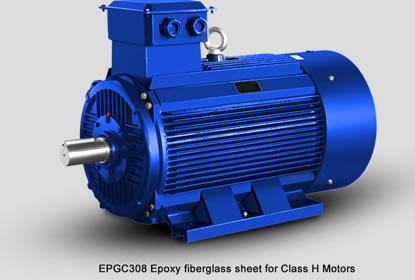
Thermal Class Matching: The insulation thermal class (e.g., Class F [\(155^{\circ }\text{C}\)] or Class H [\(180^{\circ }\text{C}\)]) must match the overall transformer temperature rise limits, without softening or aging at high temperatures.
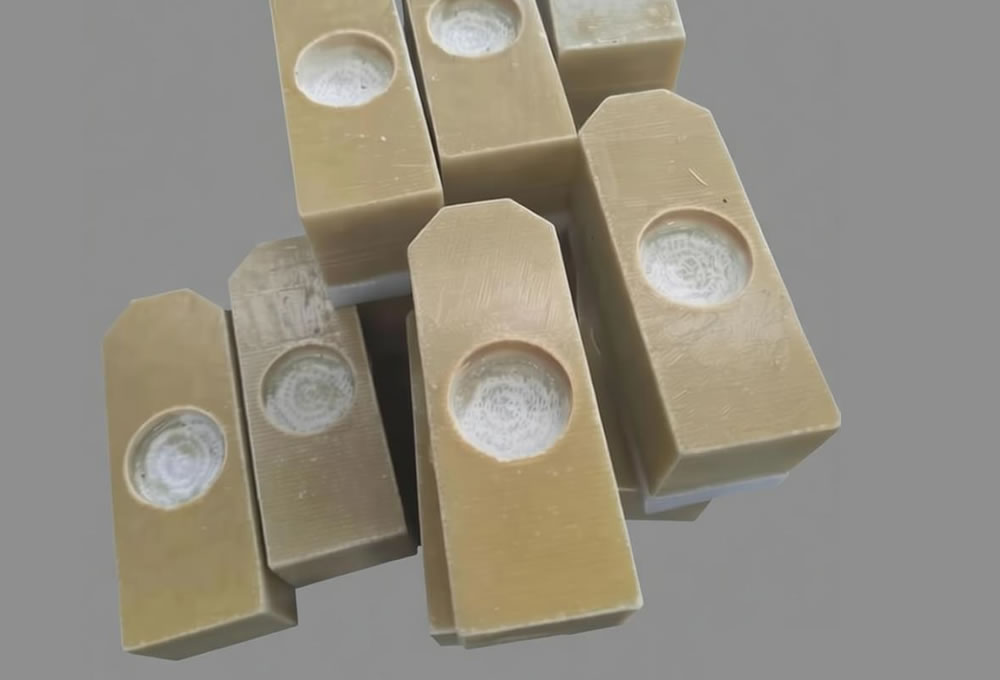
Dimensional Accuracy and Flatness: Spacers often undergo custom machining (such as slotting, drilling, or chamfering). Thickness and geometry tolerances must be strictly controlled to ensure even distribution of the coil clamping force.
Low Partial Discharge (PD): When used alongside epoxy casting resin or insulating oil, no air gaps must exist inside or on the surface of the spacer to prevent partial discharge from causing insulation breakdown.
Ztelec Group is a professional manufacturer of transformer insulation components. We provide comprehensive epoxy block solutions tailored to various transformer models and application scenarios. If you are looking for transformer epoxy blocks, please contact us. We offer one-stop solutions for transformer insulation materials.