 EN
EN  KR
KR  ES
ES  AR
AR 

NHN and NMN are both important flexible composite insulation materials widely used in motors, generators, transformers, and other electrical equipment. Although they look very similar, their core difference is quite clear:
NMN = Nomex + Polyester Film + Nomex
NHN = Nomex + Polyimide Film + Nomex
In other words, the biggest difference between NHN and NMN is not the outer Nomex layers, but the core film in the middle. NMN uses a PET polyester film as the middle layer, while NHN uses a PI polyimide film. This difference directly affects their temperature resistance, long-term thermal stability, cost, and application range.
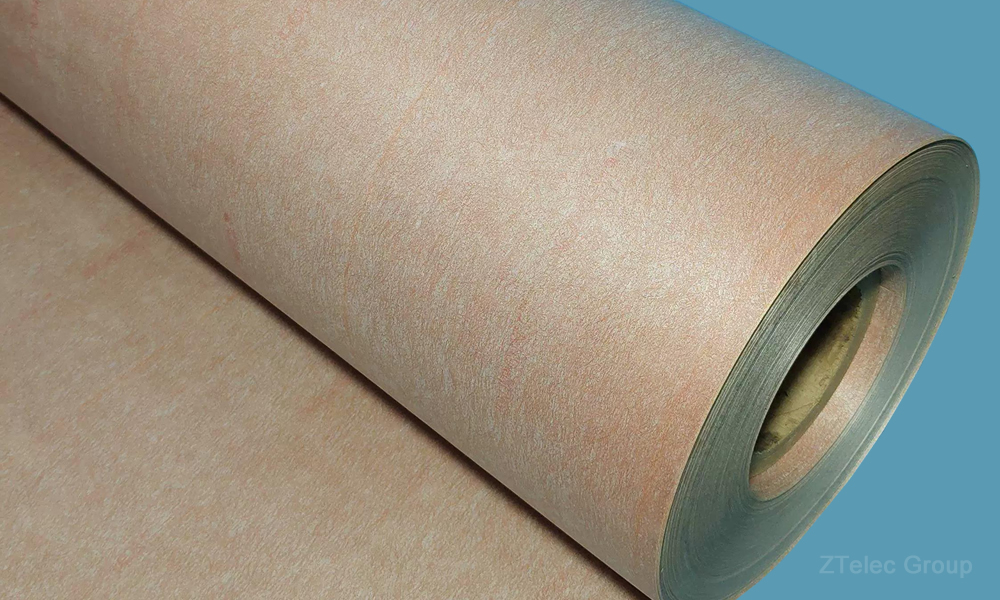
NHN generally refers to a three-layer composite insulation material consisting of Nomex–Polyimide–Nomex. It is also commonly known as 6650 NHN, while related structures such as NKN are also used in the electrical insulation industry.
The typical structure is:
Nomex Aramid Paper / Polyimide Film / Nomex Aramid Paper
The value of NHN does not simply come from bonding three layers of materials together. Instead, it combines the advantages of different materials to achieve a balanced performance.
Nomex aramid paper provides mechanical strength, heat resistance, and tear resistance, while the PI film provides excellent thermal stability, electrical insulation performance, and barrier properties.
As a result, NHN is particularly suitable for motors, generators, and other high-temperature electrical equipment where high thermal performance and electrical reliability are required.
Commercially available 6650 NHN is typically classified as a Class H, 180°C insulation material.
The key difference lies in the core film.
N – M – N
Structure:
Nomex + PET + Nomex
N – H – N
Structure:
Nomex + PI + Nomex
| Item | NMN | NHN |
|---|---|---|
| Typical Grade | 6640 | 6650 |
| Structure | Nomex + PET + Nomex | Nomex + PI + Nomex |
| Core Film | Polyester Film | Polyimide Film |
| Common Thermal Class | Class F / Some Class H | Class H |
| Typical Temperature Rating | 155°C | 180°C |
| High-Temperature Stability | Good | Excellent |
| Mechanical Strength | Very Good | Very Good |
| Flexibility | Very Good | Very Good |
| Electrical Insulation | Very Good | Excellent |
| Cost | Lower | Higher |
| Market Positioning | Mainstream, Cost-Effective | High-Temperature, High-Reliability |
Actual thermal class and performance may vary depending on the specific material construction, adhesive system, thickness, and manufacturer specifications.
This is one of the most important advantages of NHN over NMN.
PET polyester film itself offers excellent:
Therefore, NMN provides an excellent balance of electrical, mechanical, and processing performance.
However, when a motor or electrical device operates continuously at elevated temperatures, the PET film in the middle layer can become one of the temperature-limiting components of the composite insulation system.
Polyimide (PI), on the other hand, is a high-performance engineering polymer with excellent:
Replacing the PET film with PI significantly improves the high-temperature capability and long-term thermal stability of the composite material.
This is why NHN is commonly used in Class H, 180°C insulation systems, while NMN is more commonly used in Class F, 155°C applications.
For sales and technical communication, the following comparison provides a quick way to understand the difference:
| Comparison | NMN 6640 | NHN 6650 |
|---|---|---|
| Material Structure | Nomex + PET + Nomex | Nomex + PI + Nomex |
| Core Film | Polyester Film | Polyimide Film |
| Common Thermal Class | Class F | Class H |
| Typical Temperature Rating | 155°C | 180°C |
| Thermal Stability | ★★★★ | ★★★★★ |
| Electrical Performance | ★★★★ | ★★★★★ |
| Mechanical Performance | ★★★★☆ | ★★★★☆ |
| Flexibility | ★★★★★ | ★★★★☆ |
| Processability | ★★★★★ | ★★★★☆ |
| Cost | Lower | Higher |
| Cost-Effectiveness | High | High for high-temperature applications |
| Standard Motors | Recommended | Optional |
| Class H High-Temperature Motors | Optional | Recommended |
| Generators | Optional | Recommended |
| EV / Traction Motors | Depends on the insulation system | Recommended for high-temperature applications |
| High-Reliability Electrical Equipment | General Applications | Recommended |
The choice between NHN and NMN depends primarily on the thermal class, operating temperature, electrical requirements, application conditions, and cost target of the insulation system.
NMN 6640 is generally a more economical and cost-effective solution.
It is suitable for applications where a 155°C insulation system is sufficient.
NHN 6650 is generally the preferred solution.
Its Nomex + Polyimide + Nomex structure provides superior thermal stability and is suitable for insulation systems rated up to 180°C.
NHN provides a stronger performance advantage, particularly in:
If you are looking for NHN/NMN Composite Insulation Materials, please contact ZTelec Group. ZTelec Group is a professional manufacturer of high-quality electrical insulation materials with more than 65 years of manufacturing experience.it can be customized according to the product specifications, thickness and purpose you need.
Contact us now to get detailed product information and quotation. We also provide free samples for testing. Once you are satisfied with the sample quality, we can proceed with bulk production and customized solutions according to your specific requirements.