
 EN
 KR
 ES
 AR


If the tubes are primarily used as transformer insulation cylinders, winding support cylinders, or precision-machined insulating structural components, glass fabric wound laminated tubes should be evaluated first. If the tubes are subjected to relatively high axial or hoop loads, continuously filament-wound tubes should also be included in the comparison, with performance verified against the actual loading direction.
One important point is that continuous filament-wound tubes can also be made from epoxy resin and glass fibers, while glass fabric wound tubes can achieve high mechanical strength as well. The main difference lies in the reinforcement architecture and laminate structure, rather than a simple distinction between “high-strength” and “low-strength” materials.
IEC 61212-1 specifically addresses rigid industrial electrical insulating tubes and rods made from thermosetting resin binders and glass fabric or other reinforcing materials. It can serve as an important reference standard when evaluating glass fabric epoxy laminated tubes.
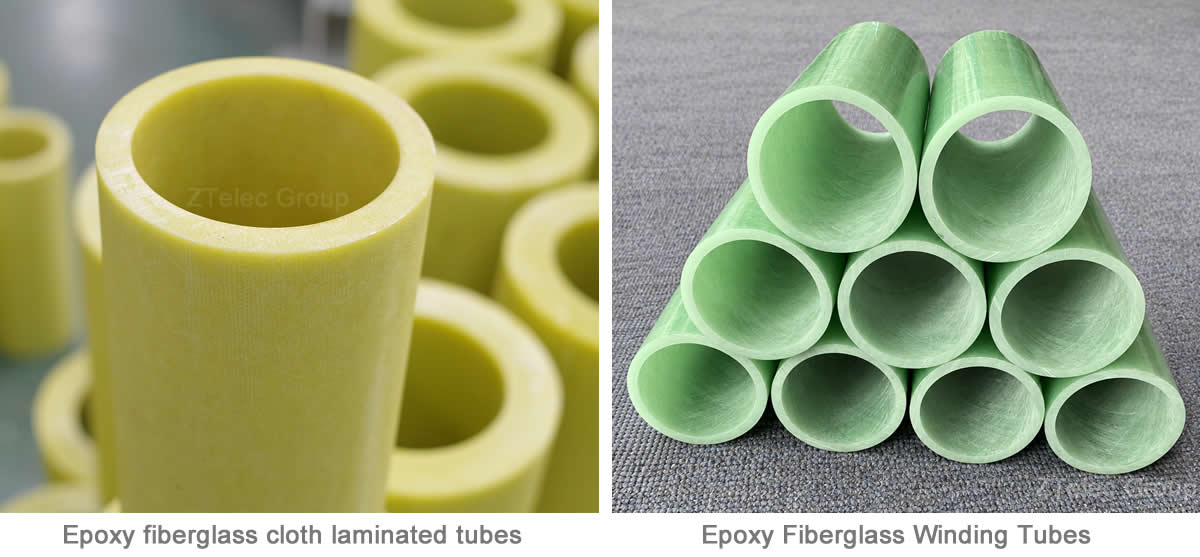
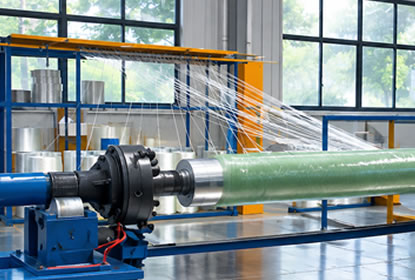
Continuous fiber reinforcement
Woven fabric laminate structure
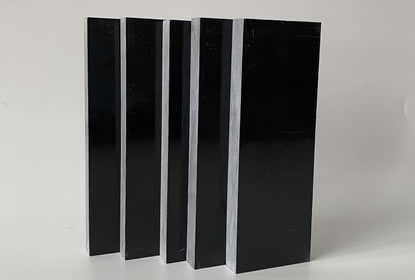
Typical material categories for glass fabric laminated tubes include EP GC 21 (commonly associated with G10) and EP GC 22 (commonly associated with G11). However, the final grade designation should be confirmed against the applicable standard edition, product construction, and material datasheet.
| Comparison Parameter | Epoxy Filament-Wound Tubes | Epoxy Glass Fabric cloth Laminated Tubes |
|---|---|---|
| Fiber architecture | Continuous fiber bundles arranged at designed winding angles | Woven glass fabric with interlaced warp and weft yarns |
| Axial load-bearing capacity | Can be optimized using axial or near-axial fiber orientations | Depends on fabric orientation, number of layers, and resin content |
| Hoop load-bearing capacity | Can be optimized through hoop-oriented winding | Depends on warp and weft orientations and the winding structure |
| Interlaminar bonding | Depends on resin impregnation, winding, and curing quality | Depends on resin impregnation, interlayer consolidation, and curing quality |
| Delamination resistance | Depends on fiber architecture, resin system, and interlaminar structure | Requires careful control of bonding quality between fabric layers |
| Wall thickness uniformity | Controlled through winding tension, winding angle, and manufacturing parameters | Affected by fabric thickness, winding tension, joints, and consolidation |
| Turning and drilling | Fiber pull-out, burrs, or delamination may occur | Interlayer peeling, burrs, or edge chipping may occur |
| Main advantages | Load-bearing performance can be tailored to specific loading directions | Balanced woven reinforcement is suitable for various insulation structures and machining applications |
Insulation cylinders subjected to hoop pressure or radial forces from windings: Both manufacturing methods can be considered. Performance should be verified based on the actual load, wall thickness, and fiber orientation.
Insulation cylinders subjected to axial clamping forces: Particular attention should be paid to axial compressive strength, end-face flatness, long-term compressive deformation, and thermal aging performance.
Tubes requiring slots, drilled holes, or turning: Glass fabric laminated tubes are generally worth evaluating first. However, the finished components must be inspected to ensure that machining has not caused significant delamination.
Tubes subjected to high mechanical loads: Continuous filament-wound tubes should not automatically be assumed to be stronger. Their performance should be compared using test results obtained from tubes with equivalent dimensions, comparable resin systems, and relevant loading directions.
For transformer applications, electrical insulation performance is often more critical than mechanical strength alone. This is particularly important in oil-immersed transformers, where the tubes may be exposed to transformer oil for extended periods while experiencing electrical fields, temperature variations, and changes in moisture content.
| Electrical Property | Continuous Filament-Wound Tubes | Glass Fabric Sheet-Wound Laminated Tubes |
|---|---|---|
| Dielectric strength perpendicular to the layers | Depends on resin content, porosity, and fiber architecture | Depends on fabric layers, resin content, porosity, and interlaminar quality |
| Electrical withstand performance parallel to the layers | Must be evaluated in relation to fiber orientation and interlayer interfaces | Requires careful evaluation of interlaminar interfaces and insulation performance along the layers |
| Insulation resistance | Depends on the resin system, moisture content, and manufacturing quality | Also depends on the resin system, moisture content, and manufacturing quality |
| Dielectric dissipation factor | Affected by resin type, moisture, frequency, and temperature | Similarly affected by resin type, moisture, frequency, and temperature |
| Water absorption | Depends on the resin, porosity, and structural characteristics | Depends on the resin, fabric layers, and porosity |
| Transformer oil resistance | Must be verified through oil compatibility and aging tests | Must be verified through oil compatibility and aging tests |
| Partial discharge risk | Requires control of voids, air bubbles, and interfacial defects | Requires control of voids, air bubbles, interlaminar defects, and machining damage |
Key conclusion: Glass fabric sheet-wound tubes do not inherently have higher dielectric strength, and continuous filament-wound tubes do not inherently provide better electrical insulation. Differences in manufacturing quality and resin systems can have a greater influence on performance than the manufacturing method itself.
Xujue Electrical, a manufacturing subsidiary of ZTelec Group, operates specialized production lines for epoxy glass fiber filament-wound tubes and glass fabric laminated tubes.
Based on your specific application, mechanical performance requirements, and electrical insulation needs, we can provide professional material selection recommendations and customized solutions to help you choose the most suitable product structure, material grade, and manufacturing process.
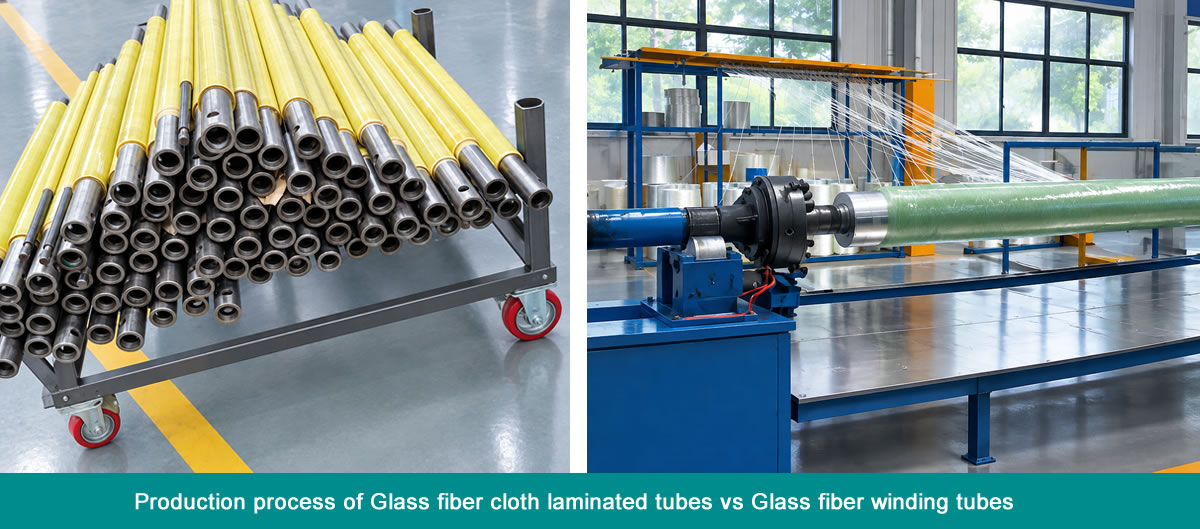
To ensure accurate material selection, technical evaluation, and quotation, buyers are advised to provide the following information.
| No. | Procurement Item | Required Information | Priority |
|---|---|---|---|
| 1 | Application | Oil-immersed transformer, dry-type transformer, insulation support cylinder, etc. | Mandatory |
| 2 | Manufacturing process | Continuous glass fiber filament winding or glass fabric sheet winding | Mandatory |
| 3 | Material system | Epoxy resin + glass fiber; specify the required material grade if known | Mandatory |
| 4 | Inner diameter (ID) | Internal tube diameter in mm | Mandatory |
| 5 | Outer diameter (OD) | External tube diameter in mm | Mandatory |
| 6 | Wall thickness | Required wall thickness, or calculate from the ID and OD | Mandatory |
| 7 | Tube length | Length per piece in mm or m | Mandatory |
| 8 | Dimensional tolerances | Tolerances for ID, OD, wall thickness, and length | Mandatory |
| 9 | Electrical properties | Dielectric strength, insulation resistance, voltage withstand, etc. | Application-dependent |
| 10 | Mechanical properties | Axial compressive strength, flexural strength, hoop strength, etc. | Application-dependent |
| 11 | Temperature rating | Continuous operating temperature and resin thermal requirements | As required |
| 12 | Operating environment | Transformer oil, humid heat, temperature cycling, etc. | As required |
| 13 | Order quantity | Sample quantity, trial order quantity, and estimated annual demand | Mandatory |
| 14 | Machining requirements | Turning, drilling, cutting, chamfering, or other machining operations | As required |
| 15 | Commercial requirements | Delivery lead time, Incoterms, and packaging requirements | Mandatory |
Providing these details will help the manufacturer evaluate the most appropriate tube construction, confirm technical feasibility, and prepare a more accurate quotation.