 EN
EN  KR
KR  ES
ES  AR
AR 

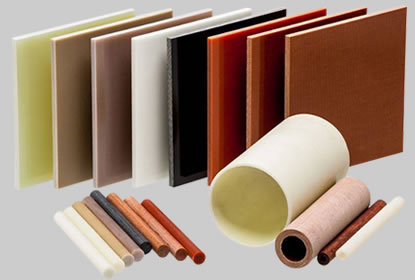
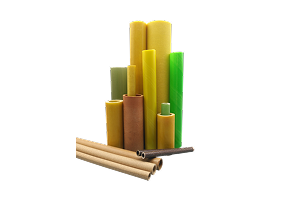
Phenolic paper tubes (also known as phenolic laminated paper tubes, commonly designated as 3520 or PFCP22 in the industry) are rigid, tube-shaped insulating materials. They are manufactured by impregnating insulating base paper, such as Kraft paper, with phenolic resin, followed by hot rolling and heat curing.
Due to their high dielectric strength, excellent mechanical support, and exceptional cost-effectiveness, phenolic paper tubes are widely used in power transmission, distribution, and electrical motor manufacturing.
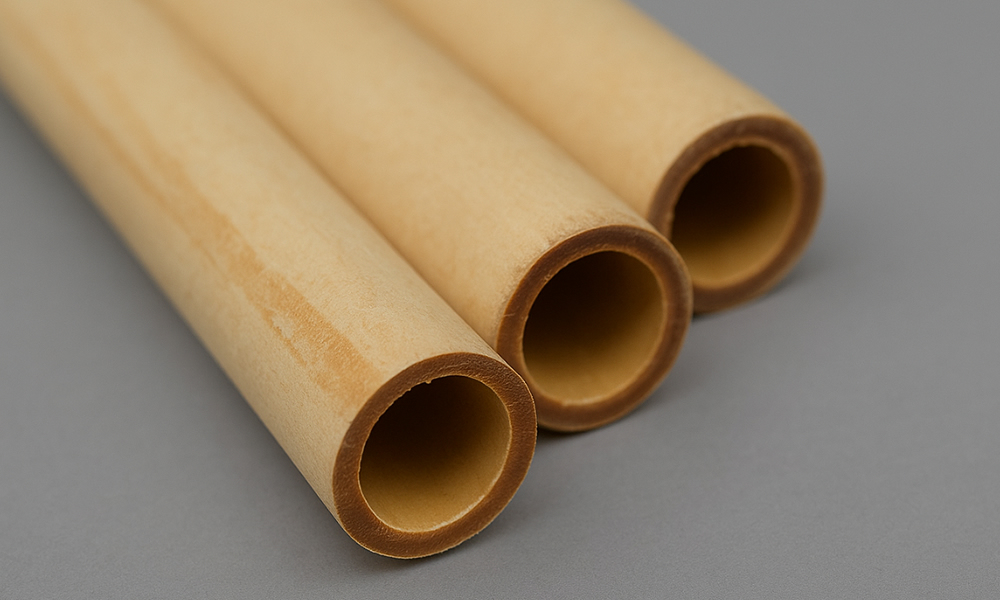
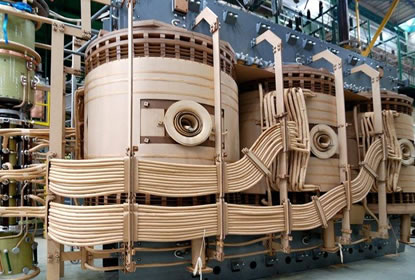
Thanks to their excellent oil resistance, thermal stability (typically Class E insulation, 120°C), and high breakdown voltage, phenolic paper tubes play a critical role in the following fields:
Due to their high hardness and wear resistance, phenolic paper tubes are also used as winding cores for high-precision wires, cables, and industrial sheets.
Multi-layer paper structures can also provide excellent thermal ablation properties, making phenolic paper-based materials suitable for certain thermal protection and liner applications, including solid-fuel rocket propulsion systems.
Selecting a tube based solely on price can lead to problems such as uneven resin impregnation, moisture susceptibility, or wide dimensional tolerances, which may compromise equipment safety. To ensure reliable performance, consider the following four critical dimensions.
Pay close attention to both dielectric strength perpendicular to the laminations and parallel to the laminations.
For transformer oil applications at 90 ± 2°C, high-quality phenolic paper tubes should provide a perpendicular breakdown voltage of approximately ≥ 6–8.5 kV/mm, depending on the specific grade and applicable standard. This helps reduce the risk of high-voltage insulation failure.
Verify whether the tube meets the required flexural and compressive strength standards based on the intended application. For example, an operating rod may need to withstand torque, while a bobbin or mandrel may primarily need to withstand axial compression.
Standard 3520 phenolic paper tubes are well suited for transformer oil applications. However, in high-humidity or exposed-air environments without oil protection, paper-based materials can absorb moisture, resulting in reduced insulation performance.
Selection Tip: For highly humid environments, consider phenolic paper tubes with moisture-resistant modifications. Alternatively, upgrade to epoxy fiberglass cloth tubes such as 3640, G10, or FR4 when higher moisture resistance and mechanical performance are required.
Standard phenolic paper tubes are generally suitable for applications around 120°C to 130°C, depending on the specific material grade and operating conditions.
If the operating temperature consistently exceeds 140°C, consider upgrading to phenolic cotton cloth tubes, which offer better wear and impact resistance, or to modified epoxy fiberglass tubes for higher thermal and mechanical performance.
Select the inner diameter (ID), outer diameter (OD), and wall thickness strictly according to the mechanical assembly requirements and dimensional tolerances of the equipment.
Wall thickness directly affects the tube’s dielectric performance, bending strength, and mechanical stability. Therefore, the required dimensions should be determined according to the actual voltage, mechanical load, and installation conditions.
High-quality phenolic paper tubes should have cleanly cut edges and a smooth, uniform surface, free from delamination, excessive ridges, cracks, or visible air bubbles.
Delamination or defects on the inner or outer walls can weaken the mechanical structure and may increase the risk of interlayer discharge or surface flashover under high-voltage conditions.
The 3520 phenolic laminated paper tube is a commonly used specification in domestic sourcing and is associated with the GB/T 1303 series of laminated thermosetting materials. For international equipment maintenance or export applications, relevant material grades and standards may include the following:
| Standard / System | Reference Grade |
|---|---|
| NEMA | Grade X / XX / XXX Paper Phenolic |
| IEC | PF CP 21 / PF CP 22 |
| MIL | MIL-I-24768/12 Type PBM |
When selecting phenolic paper tubes for electrical insulation applications, the most important factors are not only price and dimensions, but also dielectric strength, mechanical strength, temperature resistance, moisture resistance, dimensional accuracy, and compatibility with the operating environment.
For transformer oil applications, phenolic paper tubes can provide a cost-effective insulation solution. For applications requiring higher temperature resistance, moisture resistance, or mechanical strength, epoxy fiberglass tubes such as G10, FR4, or other higher-performance insulating materials may be more appropriate.