
 EN
EN  KR
KR  ES
ES  AR
AR 

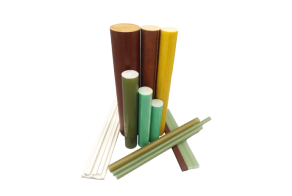
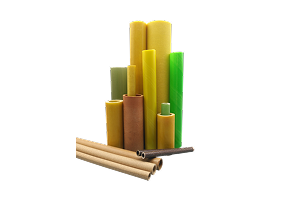
The Phenolic Cotton Cloth Tube (Phenolic Laminated Cotton Fabric Tube) is a high-performance rigid electrical insulation material made from cotton cloth reinforced with thermosetting phenolic resin.
It is manufactured through a controlled process of resin impregnation, heat rolling, and high-temperature curing, forming a dense laminated structure with excellent mechanical strength and electrical insulation properties.
With its characteristic reddish-brown or dark brown appearance, this material is widely used in transformers, medium-voltage electrical equipment, motors, and industrial insulation systems.
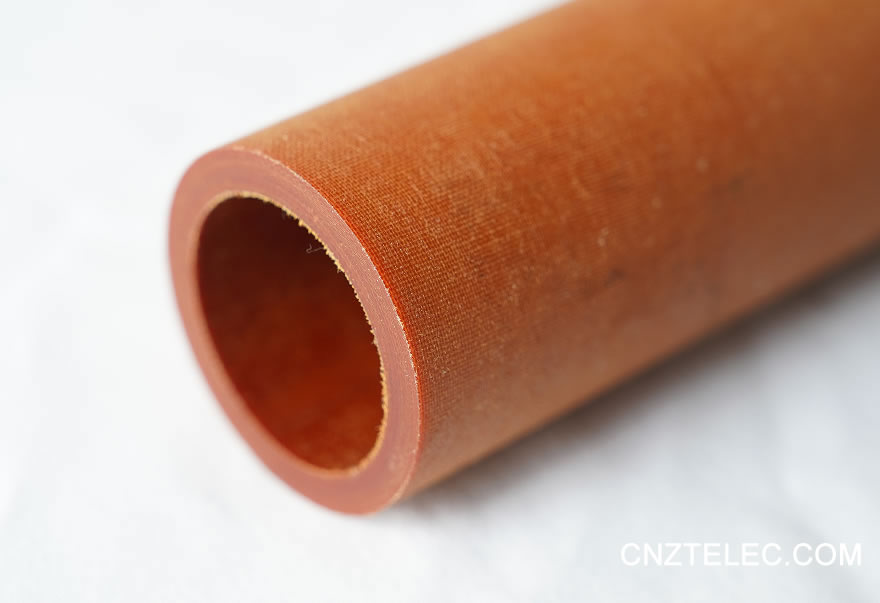
Reinforced with high-quality cotton fabric, the tube offers excellent resistance to impact, bending stress, and electrical dynamic forces.
It performs significantly better than phenolic paper tubes in heavy-duty structural applications.
The material provides stable dielectric strength in both dry conditions and transformer oil environments, making it suitable for medium and medium-voltage insulation systems.
Rated for Class E insulation (up to 120°C), it operates reliably in transformer oil for long-term service without swelling, degradation, or contamination of insulating oil.
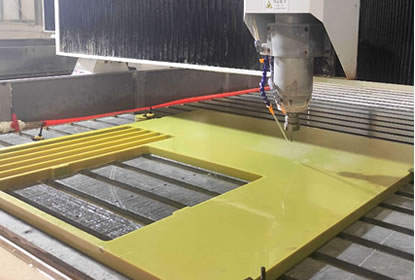
Phenolic cotton cloth tubes can be easily machined by turning, milling, drilling, and cutting.
They maintain dimensional stability and do not delaminate during processing, making them ideal for customized insulation components.
The phenolic cotton cloth tube is produced using a thermosetting lamination and roll-forming process, which ensures high structural integrity and uniform performance.
Resin Formulation → Fabric Impregnation → Drying → Heat Rolling → Curing → Demolding & Finishing
Phenol and formaldehyde are reacted under alkaline conditions to produce phenolic resin in its A-stage (soluble state), then diluted to a controlled viscosity for impregnation.
High-grade electrical cotton cloth is continuously passed through a resin bath for full impregnation.
The material is then dried in a controlled oven to reach the B-stage (semi-cured state), forming prepreg cloth.
The impregnated fabric is wound tightly onto a preheated steel mandrel under controlled tension and pressure.
Heat and pressure activate resin flow, bonding each layer into a uniform tubular structure.
The rolled tube is cured in a step-controlled oven.
During this process, the resin transitions from B-stage to C-stage, forming a fully cross-linked thermoset structure with permanent rigidity.
After cooling, the steel mandrel is removed.
The tube is then processed through trimming, surface finishing, and precision cutting to required lengths and tolerances.
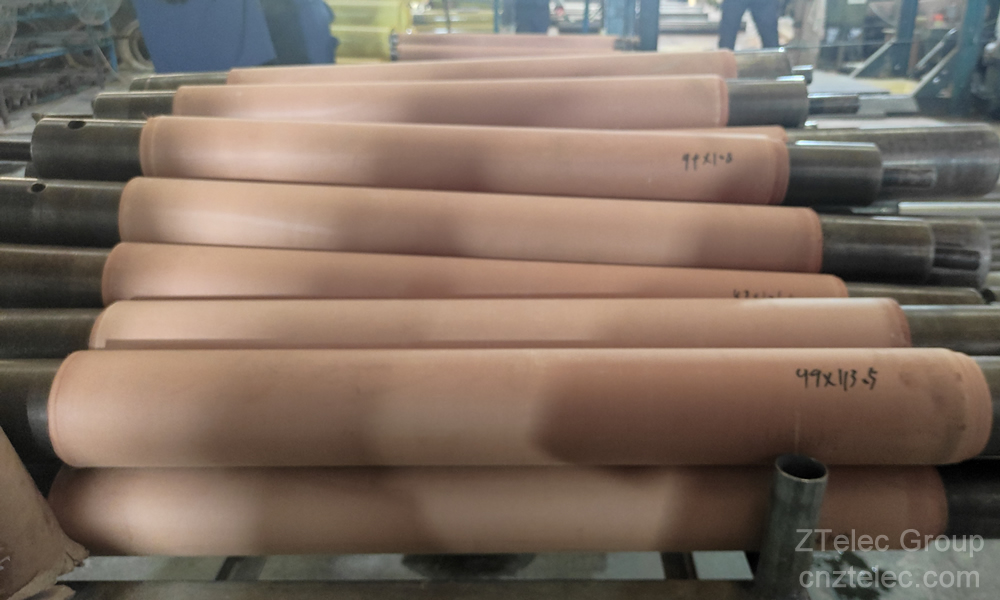
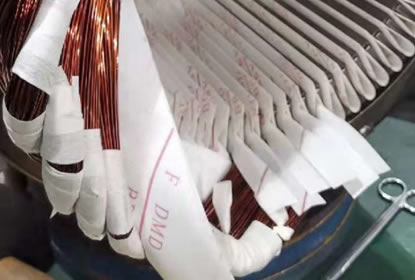
Phenolic cotton cloth tubes play a critical role in oil-immersed transformer insulation systems, where both electrical insulation and mechanical strength are required under high stress conditions.
Used on clamping bolts, core assemblies, and tie rods inside transformers.
Functions:
Applied to high-current busbars, low-voltage leads, and high-voltage winding leads.
Functions:
Used in on-load and off-load tap changers as insulating support and transmission parts.
Functions:
The Phenolic Cotton Cloth Tube is a reliable structural insulation material widely used in transformer manufacturing and high-voltage electrical systems.
Its combination of mechanical strength, dielectric reliability, and machinability makes it an essential component in modern power equipment design, especially in oil-immersed transformers requiring long-term operational stability.