

 EN
 KR
 ES
 AR


Selecting transformer pressboard cannot be based solely on the voltage rating of a transformer. Other important factors must also be considered, including transformer type, insulation structure, operating temperature, insulating oil environment, mechanical strength, as well as the thickness and density of the pressboard.
For electrical insulation material manufacturers and transformer manufacturers, the most important consideration is that different types of transformers require pressboard to perform different functions. Therefore, material selection and technical specifications will vary depending on the specific application.
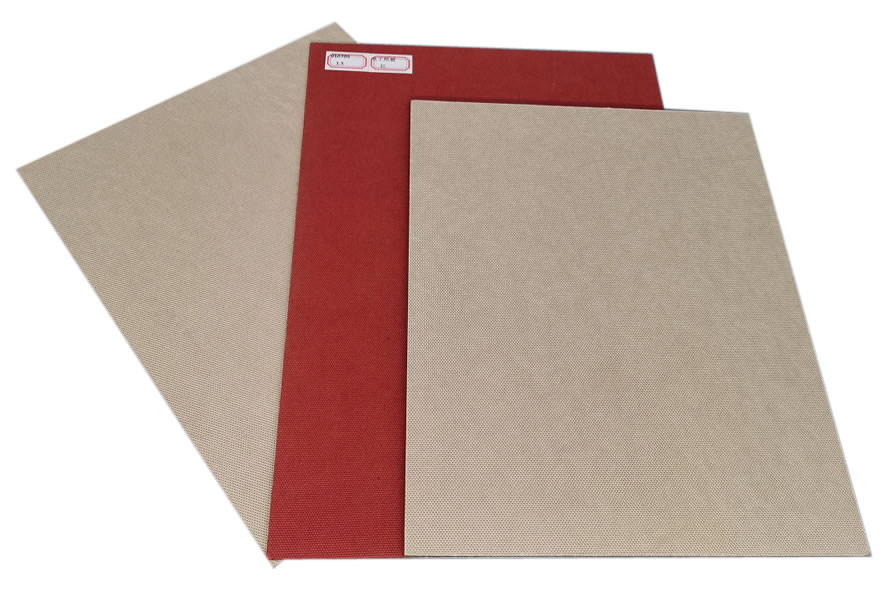
This article explains how to select transformer pressboard based on transformer type, application location, material properties, and practical selection recommendations.
Recommended Material: Transformer-grade electrical insulation pressboard.
Typical Applications:
Key Selection Criteria:
Recommended Material: Standard-density electrical insulation pressboard.
Typical Applications:
Key Selection Criteria:
Recommended Material: High-purity, high-performance electrical insulation pressboard.
Typical Applications:
Key Selection Criteria:
Recommended Material: Oil-immersed transformer pressboard that meets the required electrical and mechanical specifications.
Typical Applications:
Key Selection Criteria:
Recommended Material: Insulation materials selected according to the specific design of the dry-type insulation system.
Common Materials Include:
Key Selection Criteria:
Note: Cellulose pressboard specifically designed for oil-immersed transformers should not be considered a universal insulation material for dry-type transformers.
According to the IEC 60641 series of standards, electrical insulation pressboard is classified based on material characteristics, chemical purity, oil absorption capacity, degree of compression, and other properties.
When selecting pressboard, the following types are worth considering:
| Type | Main Characteristics | Typical Applications |
|---|---|---|
| B.2 | High chemical purity, standard electrical insulation pressboard | Conventional transformer insulation structures |
| B.3 | Pre-compressed pressboard with higher hardness and rigidity | Winding supports, spacers, and insulating barriers |
| B.4 | High purity, high oil absorption, and good formability | Special-shaped insulation components for oil-immersed transformers |
| B.5 | Mouldable pressboard with high oil absorption and good forming properties | Special-shaped insulation components |
The above classification follows the general classification approach of IEC 60641-1:2007. Specific material grades and performance requirements should be verified against the relevant parts of IEC 60641-3.
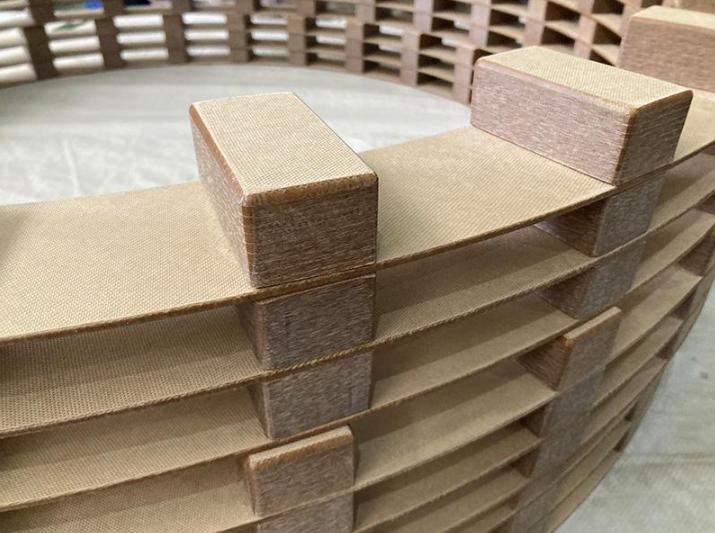
This is one of the most important considerations in practical procurement.
Even within the same oil-immersed transformer, different components have different requirements for insulation pressboard.
| Application Location | Recommended Material | Key Performance Requirements |
|---|---|---|
| Winding interlayer insulation | Standard or high-density pressboard | Dielectric strength and thickness accuracy |
| Inter-winding insulation cylinders | High-density or pre-compressed pressboard | Rigidity and dimensional stability |
| Winding end insulation | High-density pre-compressed pressboard | Compressive strength and electrical insulation performance |
| Oil duct spacers | High-density pre-compressed pressboard | Compression resistance and dimensional stability |
| Angle rings | Formable or pre-compressed pressboard | Formability and mechanical strength |
| Insulation support blocks | High-density pressboard or laminated pressboard | Compressive strength and deformation resistance |
| Lead insulation supports | Pre-compressed or laminated pressboard | Rigidity and machining accuracy |
It is important to note that the highest-density pressboard is not necessarily the best choice for every application.
For components that require bending, moulding, or complex forming, the material’s formability and oil absorption properties must also be taken into account.
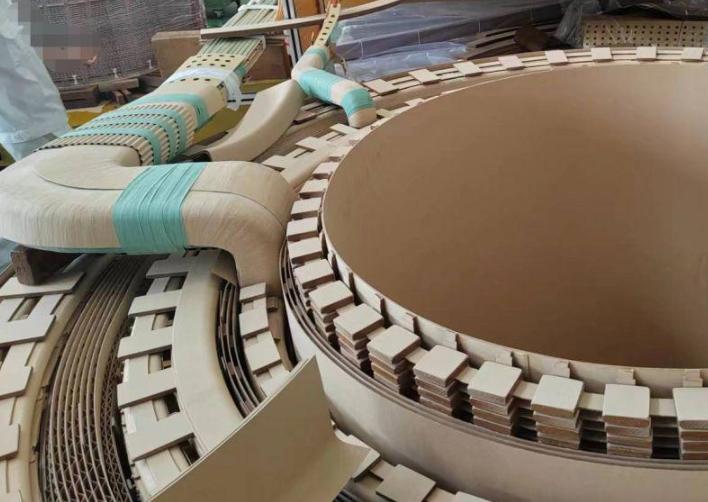
The typical density range is approximately 1.0–1.3 g/cm³, depending on the product type and thickness.
Common thickness specifications include:
0.8 mm, 1 mm, 1.5 mm, 2 mm, 2.5 mm, 3 mm, and 4 mm.
The required thickness should be determined according to the transformer design drawings and electrical clearance requirements, rather than simply relying on the voltage rating.
For winding supports, spacers, and end insulation components, particular attention should be paid to:
These properties directly affect the mechanical stability of the transformer insulation structure.
Oil absorption is particularly important for oil-immersed transformers.
Selection should consider the pressboard’s pore structure, oil absorption capacity, and compatibility with mineral insulating oil or ester-based insulating liquids.
Dielectric strength should be evaluated in combination with material thickness, testing medium, test method, and the overall insulation structure.
It is not sufficient to compare materials based solely on a single kV/mm value.
Cellulose pressboard is highly sensitive to moisture.
Moisture content directly affects electrical insulation performance and the drying process of transformers.
The above parameters can be evaluated with reference to IEC 60641-1, IEC 60641-3-1, and the corresponding test methods specified in IEC 60641-2.
One common misconception is that a higher transformer voltage rating automatically requires thicker or higher-density pressboard.
In fact, the voltage level mainly affects the design of the main insulation structure. The specific pressboard selection also depends on electric field distribution, mechanical loading, and oil duct design.
| Transformer Type | Recommended Material Direction | Key Considerations |
|---|---|---|
| Low-voltage distribution transformers | Standard electrical insulation pressboard | Cost, machinability, and insulation performance |
| Medium-voltage distribution transformers | Standard or high-density pressboard | Insulation clearances and mechanical strength |
| 110 kV power transformers | High-density or pre-compressed pressboard | Main insulation, compression resistance, and dimensional stability |
| 220 kV power transformers | High-purity, high-performance pre-compressed pressboard | Electric field control, partial discharge, and mechanical stability |
| 500 kV and above | High-performance pressboard selected according to the insulation structure | Dielectric properties, moisture content, purity, and dimensional stability |
These recommendations indicate general material selection directions rather than a direct one-to-one relationship between transformer voltage ratings and pressboard grades.
The final material selection should always comply with the transformer design specifications and the technical requirements of the transformer manufacturer.