
 EN
EN  KR
KR  ES
ES  AR
AR 

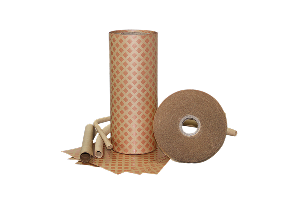
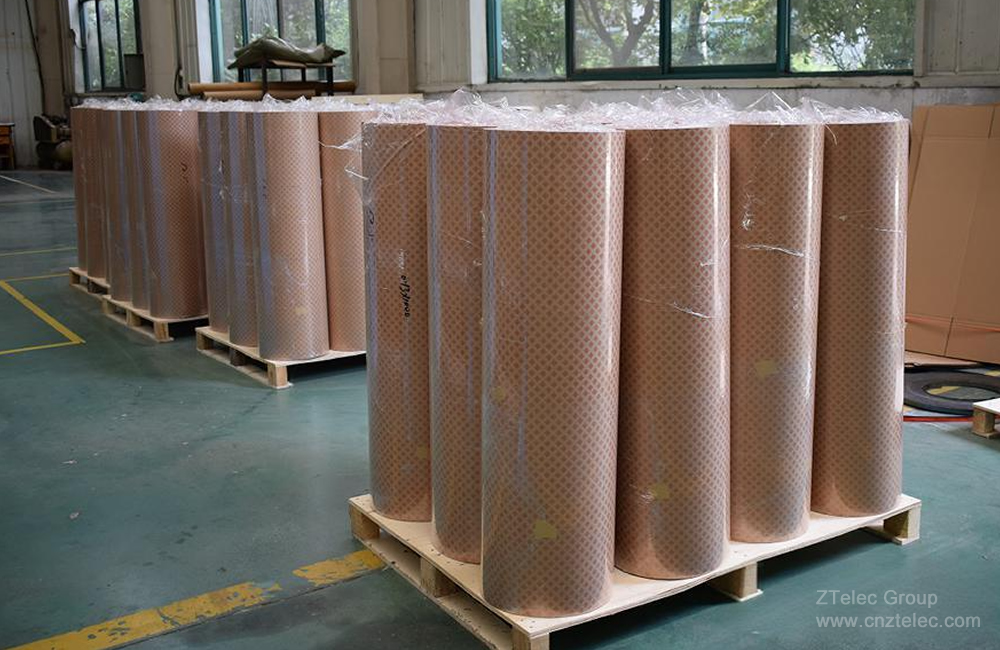
Diamond Dotted Paper (DDP paper) is a specialized electrical insulation material widely used in oil-immersed power transformers, reactors, and distribution transformers. It combines high-purity insulating paper with a thermosetting epoxy resin applied in a regular diamond-shaped dot pattern.
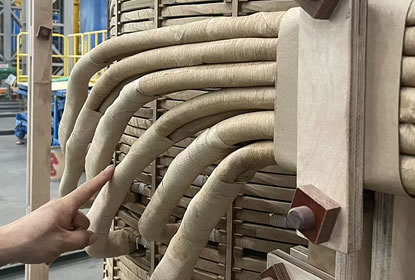
The material serves a dual purpose in transformer windings: it provides electrical insulation between coil layers, and through its heat-activated bonding mechanism, it mechanically reinforces the winding structure to withstand electromagnetic forces—particularly during short-circuit events.
| Advantage | Description |
| Enhanced mechanical strength | Bonds winding into a rigid unit, greatly improving short-circuit withstand capability |
| Simplified manufacturing | Eliminates need for vacuum pressure impregnation (VPI) in some designs |
| Superior dielectric properties | High breakdown strength in transformer oil, low dielectric loss |
| Optimized fluid flow | Diamond pattern creates channels for efficient oil impregnation and gas evacuation |
| Ease of handling | Non-tacky at room temperature, allowing smooth winding operations |
| Proven reliability | Widely used in distribution and power transformers globally |
DDP consists of two primary components:
| Component | Description |
| Base Paper | High-purity electrical kraft paper or presspaper made from carefully processed cellulose fibers with low ash content, low conductivity, and good dielectric strength in oil. Thickness typically ranges from 0.08 mm to 0.50 mm. |
| Epoxy Coating (Diamond Dots) | A specially formulated heat-curable epoxy or polyester resin applied in discrete diamond-shaped dots (typically 9.5 mm × 9.5 mm with 15.9 mm center spacing) on one or both sides of the paper. |
At room temperature, the resin remains in a B-stage (semi-cured) state, which is dry and non-tacky. This allows the paper to be easily wound onto transformer coils during manufacturing. When the completed coil is heated in an oven for drying and curing (typically at 90°C for 90 minutes, then 120–125°C), the resin dots melt, flow slightly, and bond adjacent insulation layers together. Upon further heating, the resin fully cures (C-stage), permanently bonding the winding into a rigid, mechanically stable unit.
The diamond pattern also leaves uncoated channels between the dots. These channels provide critical pathways for water vapor to escape during vacuum drying and for dielectric fluid (transformer oil) to impregnate the insulation system, minimizing partial discharge risks.
The production of high-quality diamond dotted paper requires precise control over materials and coating processes. The manufacturing sequence typically involves the following key steps:
Step 1: Raw Material Selection and Preparation
The process begins with selecting high-quality electrical-grade base paper—most commonly kraft paper or presspaper made from cellulose fibers. For higher thermal classes, synthetic aramid/polyamide-based papers may also be used. The base paper must have uniform thickness, stable density, low ionic contamination, and excellent compatibility with transformer oil.
In parallel, a heat-curable epoxy resin system is formulated. This resin must deliver adequate adhesion after curing, remain flexible during coil winding (to prevent cracking of the dried resin dots), and exhibit long-term stability in hot transformer oil.
Step 2: Diamond Pattern Coating Application
The formulated epoxy resin is applied to the base paper using a precision printing or coating system (such as gravure roll technology). The coating head deposits the resin in a regular diamond grid pattern across the paper surface. Key process parameters include:
| Parameter | Typical Specification |
| Diamond size | 9.5 mm × 9.5 mm |
| Center-to-center spacing | 15.9 mm |
| Coated area coverage | Approximately 35–45% of paper surface |
| Coating thickness per side | 0.006 – 0.012 mm |
| Coating type | One-sided or double-sided |
The resin is applied only to the diamond-shaped areas; the remaining paper surface remains uncoated. This partial coverage is essential for maintaining oil impregnation and drying channels.
Step 3: Drying and B Stage Curing
After coating, the paper passes through a heated tunnel oven. In this stage, the resin is dried and advanced to a B stage condition—meaning it becomes solid and non-tacky at room temperature (below 35°C) but retains the ability to soften and fully cure when exposed to higher temperatures later during coil processing. This B-stage condition is what makes the paper easy to handle and store without blocking or premature bonding.
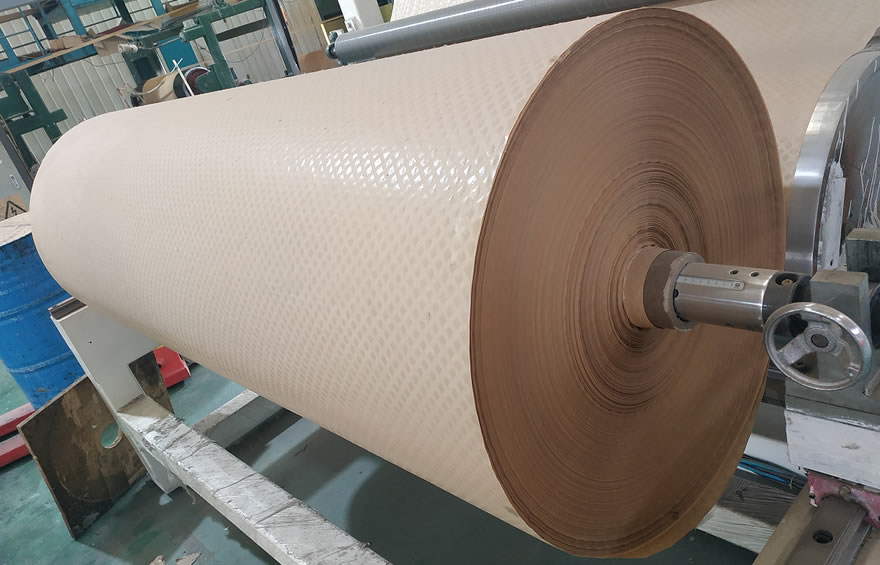
The coated paper is then wound into jumbo rolls. Typical roll lengths range from 50 to 500 meters, wound on 76 mm (3-inch) cores, and stretch-wrapped in plastic as a moisture barrier.
Step 4: Slitting and Packaging
The finished jumbo rolls are slit into customer-specified widths (typically from 500 mm to 1300 mm, and sometimes wider), or cut into sheets as required. The material is carefully packed to protect it from moisture, dust, and mechanical damage during storage and transportation. Standard storage conditions recommend keeping the product at ≤40°C in a dry, clean warehouse away from direct sunlight and heat sources. The typical shelf life is 12 months.
The final curing step occurs not in the paper mill but at the transformer manufacturing facility. After a transformer coil is wound using DDP insulation, the entire assembly undergoes a drying and curing cycle in an oven:
| Stage | Temperature | Duration | Effect |
| Initial melting | 90°C | 90 minutes | Epoxy resin softens and adheres to adjacent conductors and paper layers |
| Full curing | 120 – 125°C | Several hours | Resin fully polymerizes, creating permanent, high-strength bonds |
After this cycle, the winding becomes a rigid, bonded unit. The bond strength typically reaches ≥60 kPa (approximately 450 kPa at 100°C).
Diamond Dotted Paper is primarily used in:
| Application | Description |
| Oil-immersed power transformers | Interlayer insulation and turn-to-turn insulation between coil layers |
| Distribution transformers | Winding insulation to prevent movement between layers |
| Reactors | Insulation and structural reinforcement of windings |
| Mutual inductors (transformers) | Turn-to-turn insulation |
The material is especially valued for foil-wound transformers and winding structures that benefit from internal bonding and positional stability.